

Medical Office Cleaning in Irvine, CA: What Makes Healthcare Cleaning Different?

Medical offices and healthcare facilities have different cleaning needs than standard commercial offices. Waiting rooms, exam support areas, restrooms, reception areas, floors, and high-touch surfaces all require careful attention because patients, staff, and visitors use these spaces throughout the day.
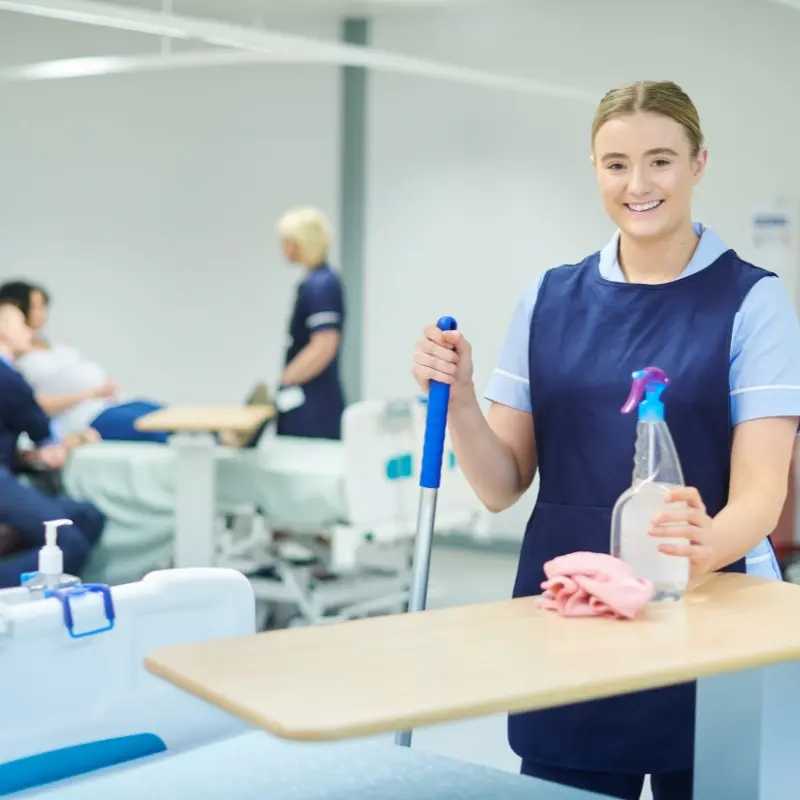
At Smart Janitorial, we provide medical office cleaning in Irvine, CA for healthcare offices, dental offices, clinics, medical buildings, and other professional healthcare spaces.
The main difference between regular office cleaning and healthcare cleaning is that medical environments often require more detailed cleaning procedures, stronger attention to high-touch surfaces, and clear facility-specific protocols.
1. Medical Cleaning Requires More Attention to High-Touch Surfaces
High-touch surfaces are areas that people contact frequently throughout the day.
Examples may include:
Door handles
Light switches
Faucet handles
Reception counters
Chair arms
Restroom fixtures
Shared counters
Handles and touchpoints
Waiting room surfaces
The CDC recommends that high-touch housekeeping surfaces in patient-care areas be cleaned and/or disinfected more frequently than surfaces with minimal hand contact. CDC
A medical cleaning program should clearly identify which surfaces require routine cleaning and which surfaces require disinfection according to the facility’s procedures.
2. Cleaning and Disinfecting Are Not the Same Thing
This distinction is especially important in healthcare environments.
Cleaning removes dirt, debris, and organic material from a surface. Disinfection uses an appropriate product to reduce or destroy microorganisms after proper cleaning.
The CDC notes that thorough cleaning is important before disinfection because remaining organic and inorganic material can interfere with the effectiveness of the disinfection process. CDC
A healthcare cleaning program should define:
What needs to be cleaned
What needs to be disinfected
Which products should be used
Who is responsible
How often each task should be completed
This is one reason medical office cleaning should be based on a written scope rather than a generic office cleaning checklist.
3. Medical Offices Need Facility-Specific Cleaning Procedures
Every medical facility is different.
A dental office does not operate exactly like a physician’s office, outpatient clinic, medical specialty practice, or healthcare building.
Cleaning procedures should consider:
Patient traffic
Number of treatment or exam areas
Restroom usage
Waiting room traffic
High-touch surfaces
Facility operating hours
Floor types
Staff areas
Breakrooms
Facility-specific infection-control requirements
The CDC recommends using a risk-based approach when determining environmental cleaning procedures, frequency, and methods in patient-care areas. CDC
Smart Janitorial can build a cleaning scope around the individual facility rather than using the same plan for every property.
Learn more about our commercial cleaning services in Irvine.
4. Waiting Rooms and Reception Areas Need Consistent Attention
Waiting rooms are among the most visible areas in a medical office.
Patients and visitors may notice:
Dirty floors
Full trash cans
Dust
Fingerprints
Restroom conditions
Dirty entrance glass
Unclean seating areas
A clean waiting room can help maintain a professional appearance and make the facility more comfortable for patients and visitors.
Cleaning may include floors, trash removal, designated furniture surfaces, reception areas, entrance glass, and high-touch points based on the agreed scope.
For facilities that also need daytime maintenance, day porter services in Irvine can help with restrooms, trash, common areas, spills, and other cleaning needs while the building is occupied.
5. Restroom Cleaning Is Especially Important
Restrooms are high-use areas in many medical buildings.
A healthcare cleaning program may include:
Toilets
Sinks
Counters
Mirrors
Floors
Fixtures
Trash removal
High-touch surfaces
Supply restocking when included
The CDC recommends cleaning housekeeping surfaces regularly, when spills occur, and when they are visibly soiled. CDC
Busy medical buildings may require restroom service more frequently than a low-traffic office.
6. Medical Floors Need the Right Cleaning Program
Medical offices can have a mix of flooring, including hard floors, resilient flooring, tile, and carpeted administrative areas.
Routine maintenance may include vacuuming, sweeping, and damp mopping. High-traffic areas may also need periodic machine cleaning or refinishing.
Smart Janitorial provides commercial floor cleaning in Irvine and floor strip and wax services in Irvine for facilities that need additional floor care.
The cleaning method should always be appropriate for the floor type and facility requirements.
7. The Right Disinfectant and Contact Time Matter
A disinfectant should not simply be sprayed and immediately wiped away unless the product label allows that method.
CDC guidance recommends using EPA-registered disinfectants where appropriate and following manufacturer instructions. CDC
That includes following requirements such as:
Proper dilution
Surface compatibility
Application method
Required contact time
Personal protective equipment
Storage and handling instructions
Medical cleaning teams should follow the healthcare facility’s approved procedures and product requirements.
8. Training and Written Cleaning Procedures Matter
Healthcare cleaning should not depend entirely on memory.
The CDC recommends standardized protocols, staff training, cleaning schedules, and procedures that identify responsibilities, methods, and frequencies for different patient-care areas. CDC
When evaluating a medical cleaning company, ask whether they use:
Written scopes of work
Cleaner training
Quality inspections
Account management
Cleaning checklists
Service follow-up
Clear communication procedures
At Smart Janitorial, you can learn more about our cleaning process and quality control systems.
9. Medical Cleaning vs. Regular Office Cleaning
Both services may include trash removal, restroom cleaning, vacuuming, mopping, and general surface cleaning.
The difference is often in the level of detail, protocols, frequency, products, and facility-specific requirements.
A standard office may primarily focus on appearance and routine facility maintenance.
A medical office may require more attention to high-touch surfaces, patient-facing spaces, cleaning and disinfection procedures, and documented facility requirements.
For conventional business environments, explore our office cleaning services in Irvine.
10. What Should You Look for in an Irvine Medical Cleaning Company?
Before choosing a medical cleaning provider, ask about:
Commercial healthcare cleaning experience
Cleaner training
Insurance
Written scopes of work
Quality control
Account management
Cleaning and disinfecting procedures
Products used
Communication
Facility-specific requirements
Avoid choosing a provider simply because it offers the lowest price.
A medical cleaning company should understand that healthcare environments require consistency, documentation, communication, and adherence to the facility’s cleaning procedures.
You can review Smart Janitorial's customer reviews, customer satisfaction process, and before-and-after cleaning gallery.
How Often Should a Medical Office Be Cleaned?
Cleaning frequency depends on the facility.
Important factors include:
Number of patients
Number of employees
Facility size
Restroom traffic
Number of exam or treatment areas
Operating hours
High-touch surfaces
Facility procedures
Cleaning and disinfection requirements
Some medical offices may require nightly cleaning, while other areas may need attention multiple times during the day.
The CDC emphasizes that cleaning frequency in healthcare environments should consider contamination risk, patient vulnerability, and potential exposure. CDC
An onsite walkthrough helps determine the appropriate cleaning schedule and scope.
How Much Does Medical Office Cleaning Cost in Irvine, CA?
Medical cleaning pricing depends on the facility and cleaning requirements.
Common pricing factors include:
Square footage
Cleaning frequency
Number of restrooms
Patient traffic
Number of treatment areas
Floor types
Required disinfecting procedures
Operating hours
Supply requirements
Specialty cleaning
Day porter requirements
A small medical office will have a different cleaning cost than a larger healthcare facility requiring nightly service and daytime cleaning support.
The most accurate way to price medical cleaning is to complete an onsite walkthrough and develop a written cleaning scope.
Frequently Asked Questions About Medical Office Cleaning in Irvine
What is included in medical office cleaning?
Services may include restroom cleaning, trash removal, floor cleaning, waiting room cleaning, reception areas, breakrooms, high-touch surfaces, and other agreed areas. The exact scope should be customized to the medical facility.
Is medical cleaning different from regular office cleaning?
Yes. Medical facilities may require additional attention to high-touch surfaces, patient areas, cleaning frequency, disinfectants, facility protocols, and infection-control procedures.
Does every surface need to be disinfected?
Not necessarily. CDC guidance distinguishes between different surfaces and cleaning needs. High-touch and patient-care surfaces may require more frequent cleaning or disinfection than low-touch surfaces. CDC
Does Smart Janitorial clean medical equipment?
Medical equipment cleaning should follow manufacturer instructions and facility protocols. CDC guidance specifically recommends following manufacturers' instructions for cleaning and maintaining noncritical medical equipment. CDC Your facility should clearly define which equipment is handled by clinical staff and which environmental surfaces are included in the janitorial scope.
Can medical offices receive nightly cleaning?
Yes. Medical offices can schedule cleaning after business hours to reduce interference with patients and staff. The schedule should be based on the facility’s operating hours and cleaning requirements.
Can medical buildings also use day porter services?
Yes. Larger or busier facilities may use a day porter for restroom checks, trash removal, common areas, spills, and other daytime maintenance in addition to nightly cleaning.
Get a Medical Office Cleaning Quote in Irvine, CA
Smart Janitorial provides medical cleaning services for Irvine medical offices, dental offices, clinics, healthcare buildings, and professional medical facilities.
With more than 12 years of commercial cleaning experience, our team focuses on trained cleaning staff, clear scopes of work, account management, quality control, and dependable communication.
Learn more about our medical cleaning services in Irvine or explore our complete commercial cleaning services in Irvine.
Smart Janitorial Irvine - 92 Corporate Park, Ste C #160, Irvine, CA 92606


Comments